Dixon Hall
UX Research Collaboration
/ CASE STUDY 05
Collaborative UX research initiative for Toronto's historic Dixon Hall website redesign, focusing on user needs, pain points, and content accessibility.
Our team conducted comprehensive user research including surveys, stakeholder interviews, and competitor analysis to inform the redesign of this cultural landmark's digital presence.
/ RESEARCH IMPACT
68%
mobile device users
52%
unable to find booking
74%
interested in historical tours

/ RESEARCH METHODS
Comprehensive user research combining quantitative and qualitative methods to understand visitor needs and pain points.
The research focused on user needs, pain points, and content accessibility through surveys, interviews, and competitor analysis to inform the website redesign.
/ RESEARCH DATA
Key insights from user research and analysis
| Method | Participants | Key Insight |
|---|---|---|
| User Survey | 45 respondents | Users wanted clear event booking and better mobile navigation. |
| Stakeholder Interviews | 3 staff | Need to highlight history and booking features equally. |
| Competitor Review | 6 similar sites | Most successful sites prioritized visual storytelling and events calendar. |
/ DATA VISUALIZATION
Key research metrics and user behavior insights
/ PRESENTATION SLIDES
Select slides from the research presentation
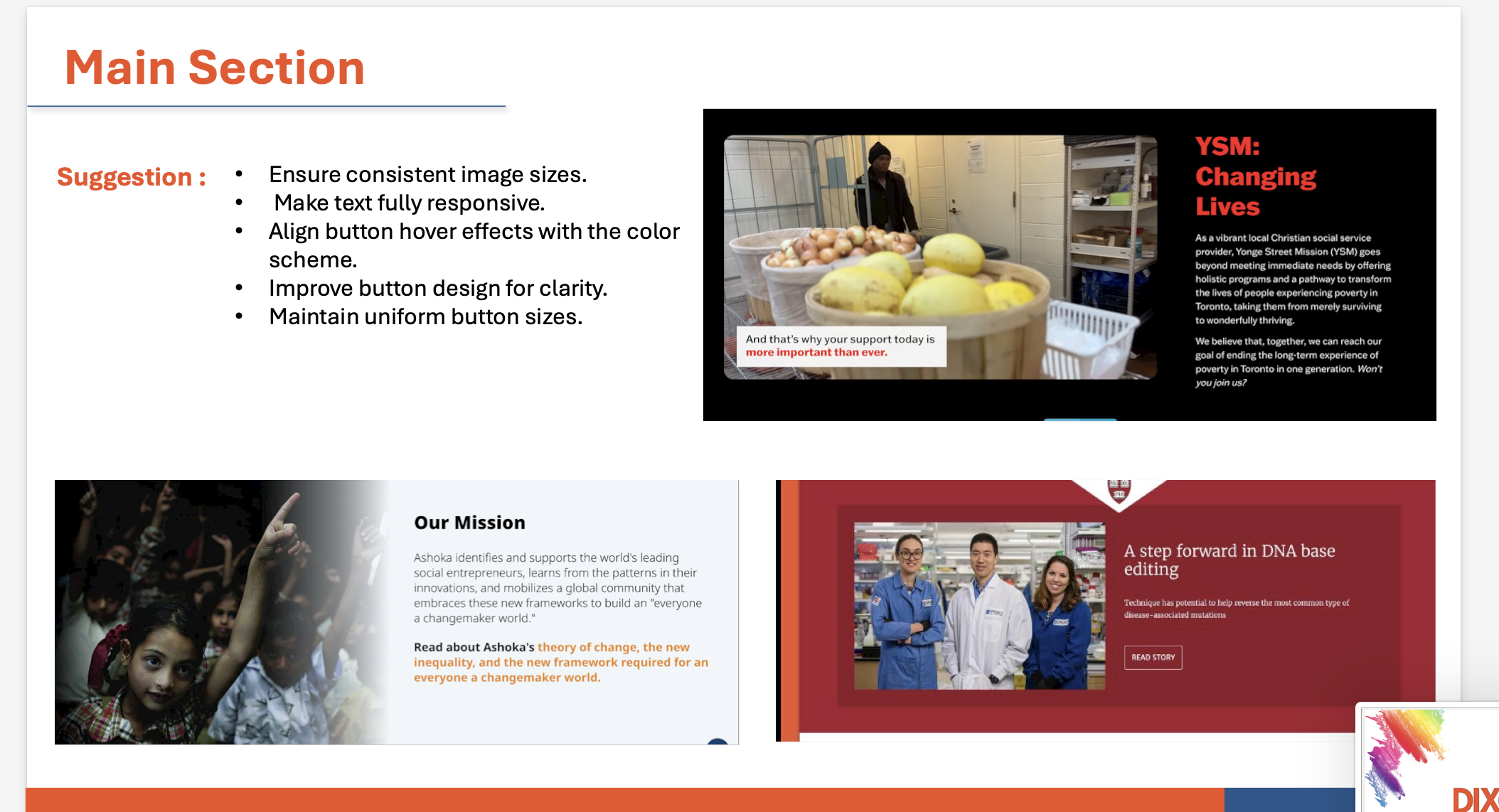
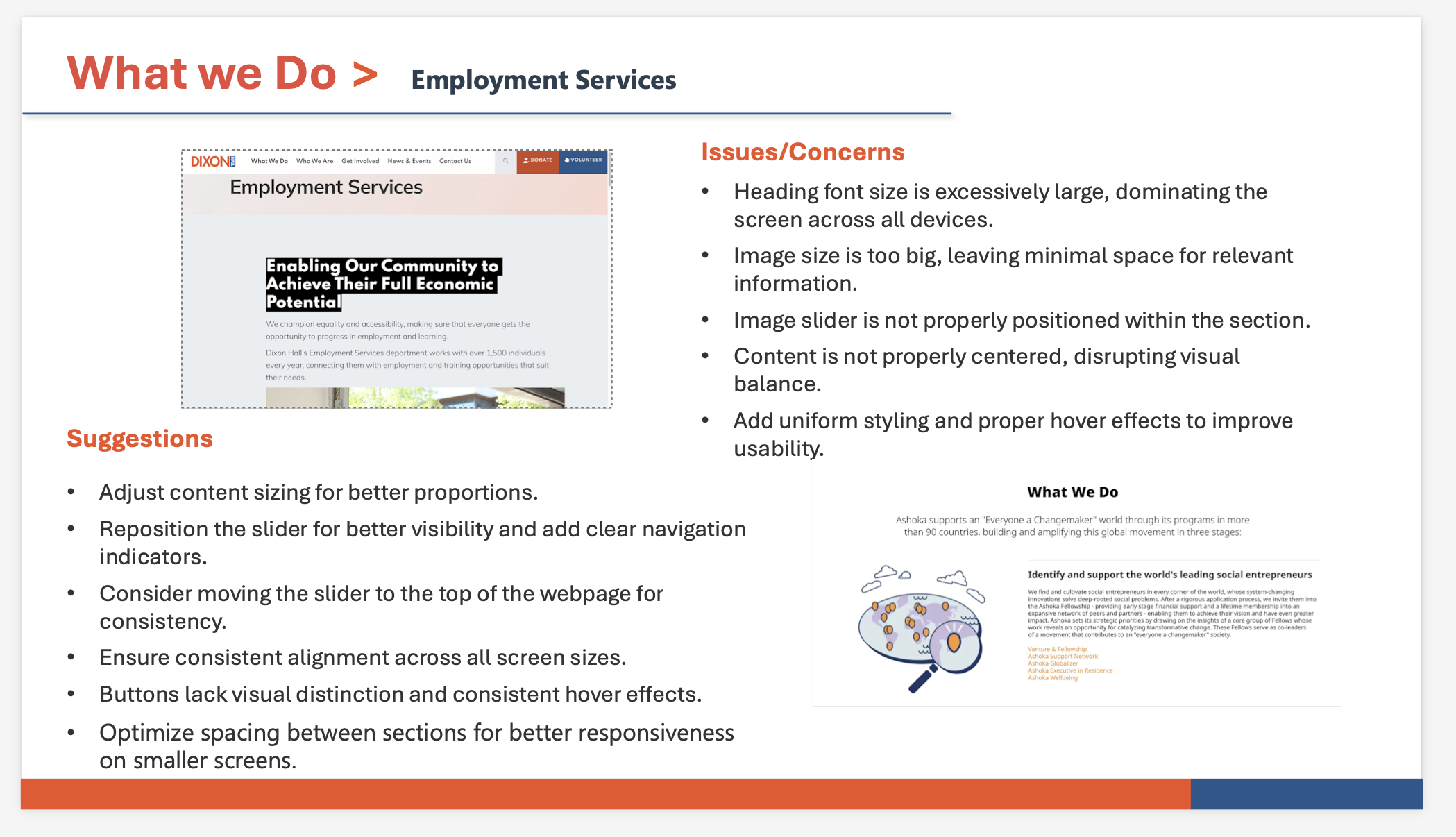
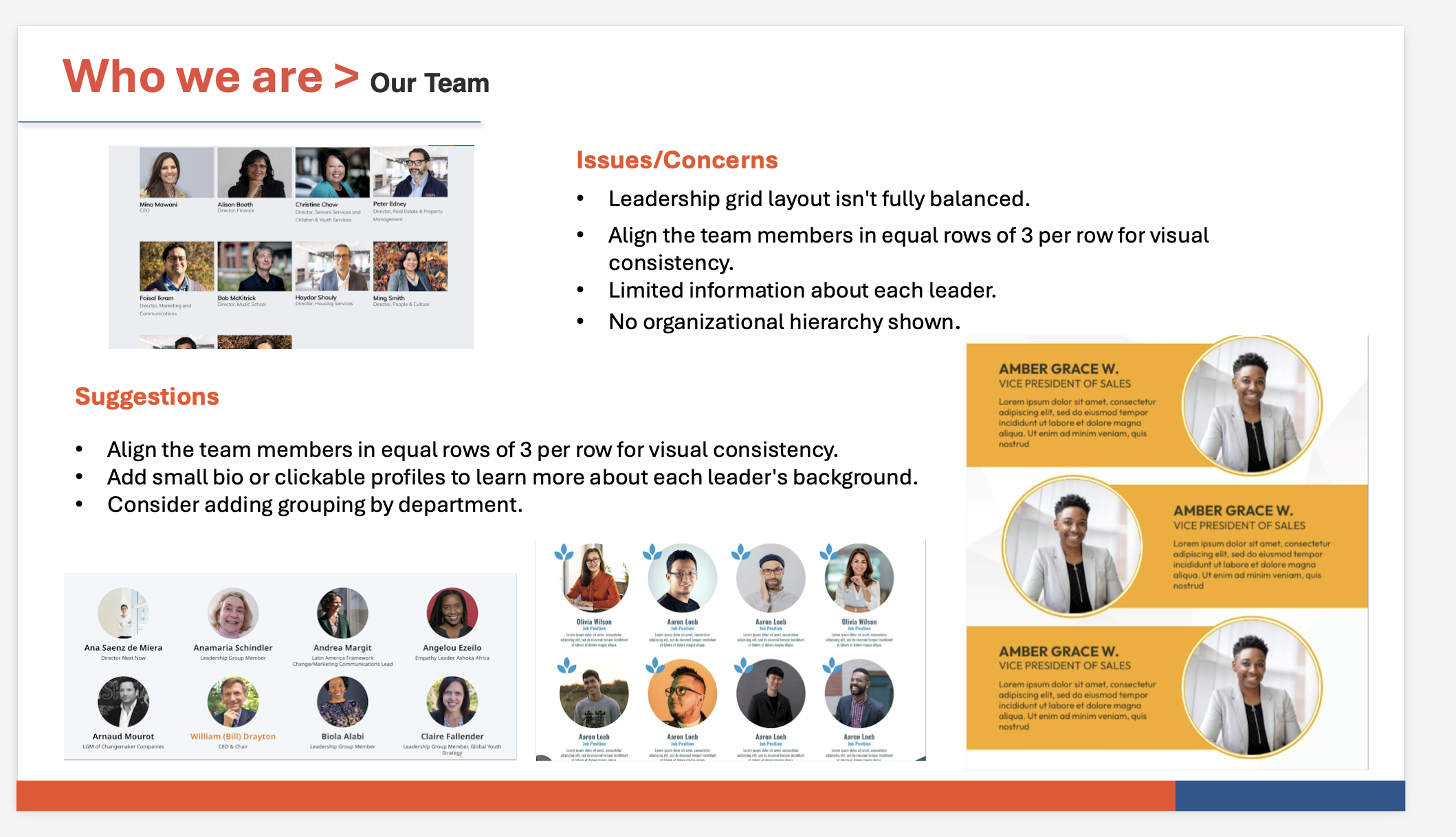
Objective
Conduct comprehensive UX research to inform the redesign of Toronto's historic Dixon Hall website.
Highlights
User surveys (45 respondents), stakeholder interviews (3 staff), competitor analysis (6 sites), and data-driven insights.
Deliverables
Detailed research report, presentation slides, and handoff document for the design team.
Outcome
Clear user insights and actionable recommendations that guided the successful website redesign.